☎ Water where it should not be? Talk it through with a local Arvada plumber at (303) 552-3896.
Two Completely Different Problems
A plumbing leak wets from a point and runs on the plumbing's schedule, indifferent to weather. Groundwater rises on the season's schedule, worst during spring melt and wet years, arriving through structural paths rather than any pipe. The fixes have nothing in common: one is a plumber's visit, the other is drainage, grading, and waterproofing work.
Getting it wrong is expensive in both directions, paying a plumber to chase water the clay delivered, or waterproofing against a leak a fitting caused. That is why the sort comes first, the pressure-first discipline our basement leak page insists on.
The Pressure-First Sort
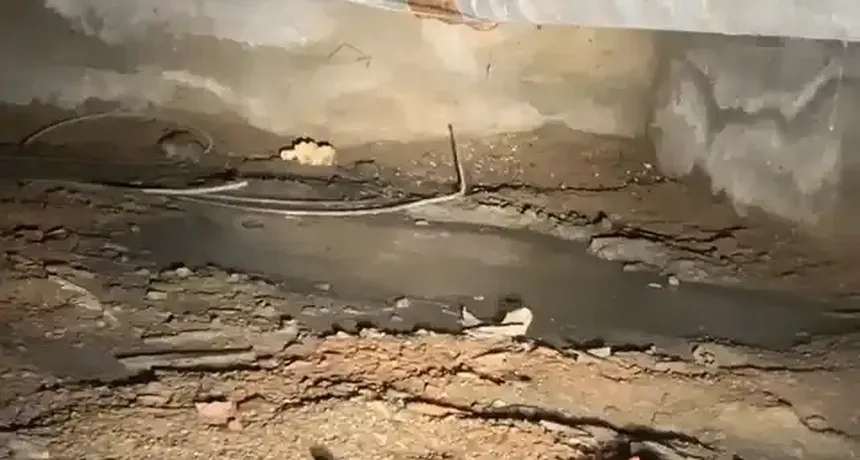
The decisive test isolates the plumbing. A pressure check on the supply system, plus watching the meter with everything off, settles it in about an hour. It either convicts a pressurized leak or clears the plumbing entirely. Cleared plumbing, plus seasonal timing, plus perimeter-following moisture, all point at groundwater. The investigation then turns to drainage instead of pipe.
Timing is a strong clue on its own. Moisture that peaks in spring and fades by summer, concentrated along the foundation perimeter, reads as groundwater. Moisture tied to fixture use or holding steady year-round reads as plumbing. But the pressure test settles it rather than leaving it to inference.
The Arvada Clay Angle
This is expansive-clay country, and the same soil that damages foundations delivers spring groundwater to the low side of many lots. The reservoir-adjacent and low-lying blocks around Maple Grove feel it most, and farm-era ditch alignments still route subsurface water under parts of the old city in patterns no map shows.
One self-inflicted version deserves naming: a sump pump discharge line that split in a freeze can quietly recycle the basement's own water right back to the foundation. It imitates groundwater while actually being a fixable plumbing failure, the case our sump pump page covers. Following the discharge to a real, downslope termination is thirty seconds well spent.
The Cheap Defensive List
If the plumbing tests clean, most spring dampness answers to housekeeping: downspouts extended past the backfill, grading kept sloping away from the house, window wells drained, and the sump tested each February before the melt. Homes that stay on top of that list seldom encounter their water table inside.
If the dampness persists after the housekeeping, or if you would rather know before spending on either trade, the hour-long sort is the place to start. Book it at (303) 552-3896 and get a written answer before funding anyone's fix.
Spring Basement Questions From Arvada
My basement is damp every spring but I never find a leak. What is it?
Very possibly not plumbing at all: a seasonal water table combined with one weak link in the defensive routine. A pressure check clears your plumbing inside an hour, and the remedy is normally drainage upkeep, the downspouts, the grading, the sump, rather than any length of pipe.
How can you tell groundwater from a real leak?
Timing and testing. Groundwater peaks in spring, fades by summer, and follows the foundation perimeter; plumbing leaks track fixture use or hold steady year-round. A supply pressure check plus a meter read either convicts the plumbing or clears it, which settles the question rather than guessing from symptoms.
Could my sump pump be causing the dampness?
It can. A discharge line that split in a freeze recycles the pit's water back into the soil beside the foundation, imitating groundwater while being a fixable plumbing failure. Follow the discharge to a real downslope termination; if it dead-ends near the house, that is your answer.
What if the basement is actively flooding rather than just damp?
That is a different emergency entirely, closer to a water main break than seasonal seepage. water main break flooding covers that more urgent scenario, including what to expect once water has actually reached the floor rather than just the walls.